
What Is Generative Engine Optimization (GEO)?
Most people hear “generative engine optimization” and assume it’s SEO wearing a new hat. It isn’t, quite. GEO shares its foundations with SEO, but the way you actually earn visibility is different: you’re not fighting for a rank position anymore. You’re trying to get quoted inside an answer the AI writes for the user.
Table of contents
- Generative Engine Optimization Definition
- Why GEO Matters in 2026
- How Generative Engines Work: Retrieval, Synthesis, Citation
- GEO vs SEO: What’s the Difference?
- GEO vs AEO: Are They the Same Thing?
- Core GEO Strategies That Actually Work
- How to Measure GEO Success
- Getting Started With GEO
- Frequently Asked Questions
Generative Engine Optimization Definition
Generative Engine Optimization (GEO) is the practice of shaping your content, entities, and online presence so generative AI engines like ChatGPT, Perplexity, and Google’s AI Overviews cite or mention you when they answer a question. Instead of ranking a list of links, these engines synthesize a single answer from multiple sources, and GEO improves your odds of being one of them.
A generative engine is any search experience that reads across many pages and writes one summarized answer, rather than handing you ten blue links to sort through yourself (Aggarwal et al., 2024). ChatGPT, Perplexity, Google’s AI Overviews, and Gemini all qualify.
GEO is not paying to appear, and it’s not a trick to manipulate the model. It’s the work of making your content the clearest, most citable source on a topic so the engine reaches for you.
Why GEO Matters in 2026
Search stopped being a page of ten links for a large share of users. ChatGPT reached 900 million weekly active users in February 2026 and crossed a billion monthly app users by June, according to TechCrunch. That’s an audience running everyday queries through a generative engine instead of a results page.
It’s happening inside Google too. AI Overviews now appear on roughly 48% of Google searches and reach more than two billion users, per industry tracking of Google’s rollout. Nearly half of the queries you already target are being answered by a synthesized block before anyone scrolls to your result.
Here’s the uncomfortable part for anyone who lives in Search Console. You can rank well and still be absent from the answer the AI writes. If the engine doesn’t cite you, you’re invisible in that channel regardless of your organic position. GEO is how you close that gap.
How Generative Engines Work: Retrieval, Synthesis, Citation
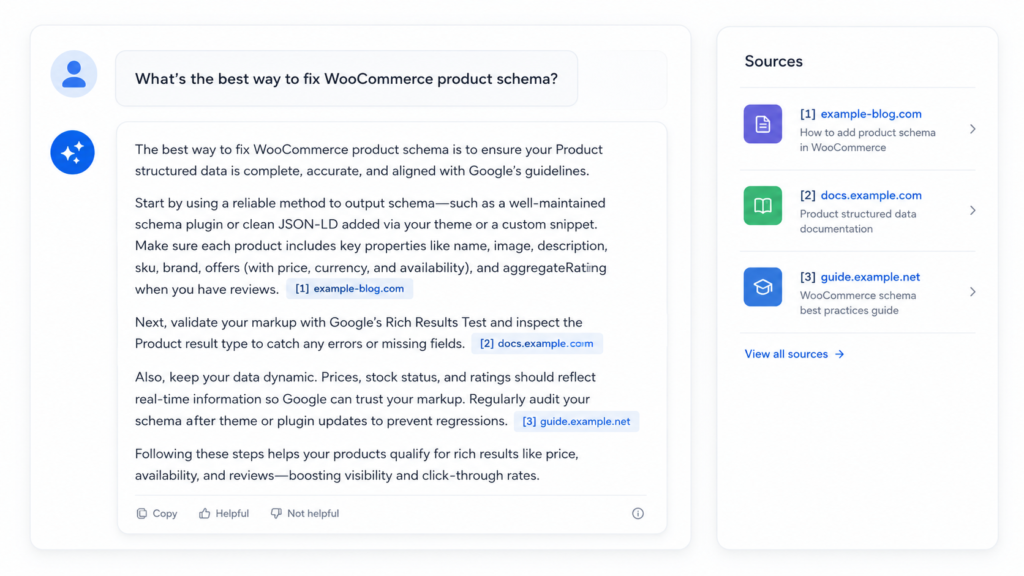
You can’t optimize for a system you don’t understand, so it’s worth seeing the pipeline. Most generative engines answer a query in three moves:
- Retrieve: the engine pulls candidate content from the live web, knowledge graphs, and its own index, often through retrieval-augmented generation (iPullRank).
- Synthesize: it merges and rewrites information from several pages into one coherent answer. It doesn’t copy and paste. It paraphrases and combines.
- Cite: it attaches source links to specific claims in that answer, so the user can trace where a point came from.
Traditional search stops at step one and shows you the retrieved list. Generative engines go all the way to a written answer with a short citation list attached. That last step, citation, is the entire game for content creators, and the next two sections explain what drives it.
Query Fan-Out
Generative engines rarely search for your exact phrase. They break one prompt into several parallel sub-queries, definitions, comparisons, reviews, then run them at once and stitch the results together. A single question like “best schema plugin for WooCommerce” might quietly fan out into “what is product schema,” “WooCommerce schema plugins compared,” and “how to fix rich snippet errors.”
The practical takeaway: cover a topic with breadth, not just your one head keyword. If your page only answers the literal query, it misses the sub-queries where citations are actually won.
Source Selection and Citation
A passage gets cited because it directly supports a specific point in the answer, not because its parent page holds a top-ten position. iPullRank’s analysis found that roughly 68% of pages cited in AI Overviews were not in the top 10 organic results.
That flips a familiar assumption. You don’t need to own position one to be quoted. You need self-contained passages that answer a sub-question cleanly enough to lift straight into the response.
GEO vs SEO: What’s the Difference?
GEO doesn’t replace SEO. It extends it. Most of what makes you rankable, crawlable pages, quality content, real authority, is also what makes you citable, so your existing organic traffic strategies are the foundation, not wasted effort (Semrush).
The difference is what you’re optimizing toward. SEO chases a position in a list of links. GEO chases a mention inside a synthesized answer. The unit of visibility shrinks from the page to the passage.
| Dimension | SEO | GEO |
|---|---|---|
| Goal | Rank in the list of links | Get cited in the AI’s answer |
| Unit of visibility | The page or URL | The passage |
| Primary surface | Google and Bing results pages | ChatGPT, Perplexity, AI Overviews |
| Success metric | Position, clicks | Mentions, citations, referral traffic |
| Foundation | On-page, links, technical | Same foundation, plus extractability and entities |
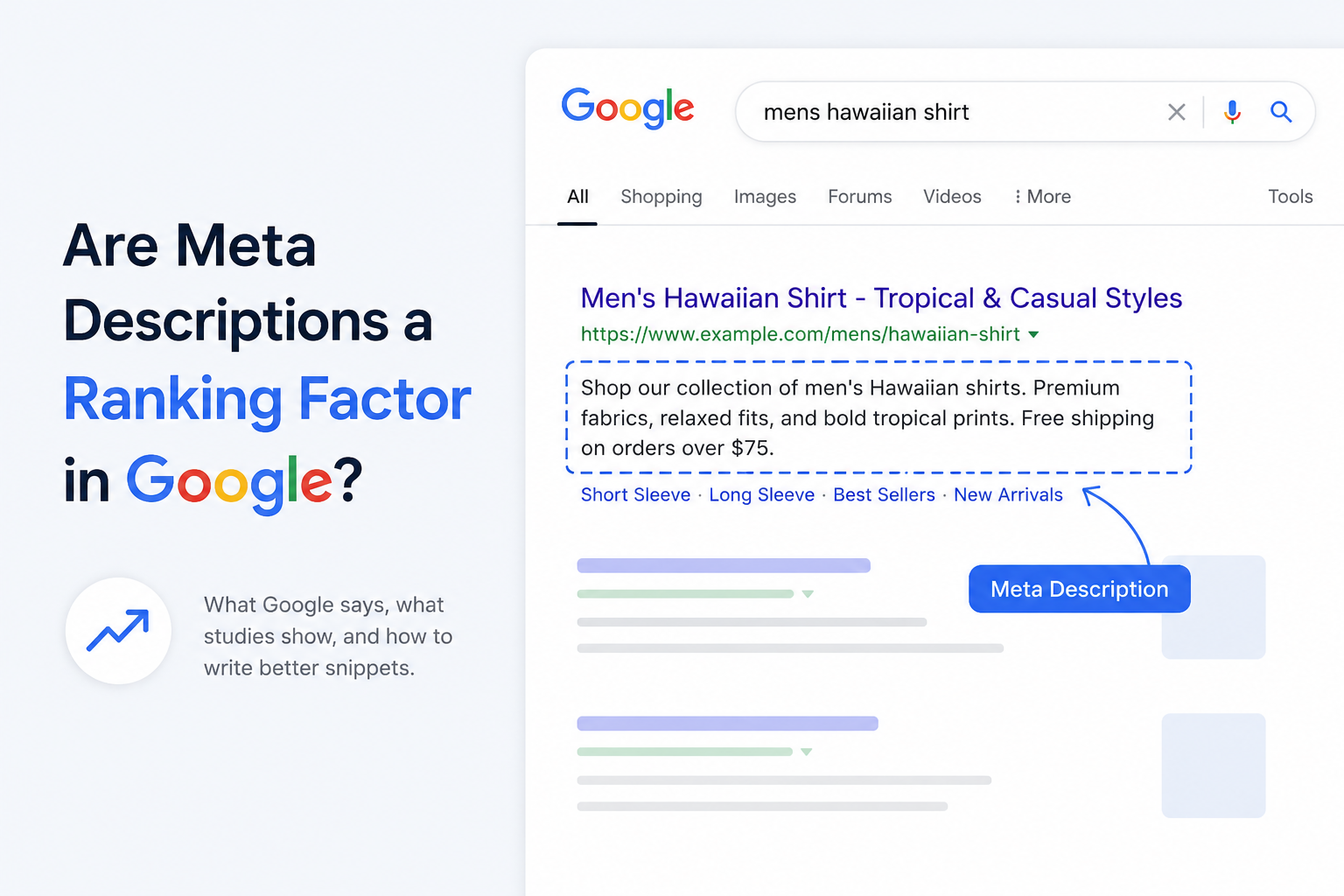
Even a classic on-page concern like meta descriptions still matters here, because the same clarity that helps a human skim a snippet helps an engine decide your passage is worth quoting.
GEO vs AEO: Are They the Same Thing?
Not exactly, and the overlap causes most of the confusion. Answer Engine Optimization (AEO) grew up around featured snippets and voice answers, where the goal was to get your content pulled into a direct answer box. GEO is specific to generative engines that write a fresh answer and cite sources (Wikipedia).
Here’s my take: GEO is the generative subset of AEO, and AEO is the wider umbrella. Fighting over the label is a waste of energy, because the tactics overlap heavily. Make content extractable and authoritative and you serve both.
The distinction earns its keep in one place. AEO leans toward short, directly answerable questions. GEO matters most on broad topics where the engine has to choose between competitors while synthesizing, and you want to be the one it picks.
Core GEO Strategies That Actually Work
These tactics aren’t opinion. They come from the first large-scale study of GEO, the Princeton-led paper that introduced the term and tested content changes across a benchmark of thousands of queries.
The headline finding: GEO methods can boost visibility by up to 40% in generative engine responses, and the biggest gains came from adding statistics, citing sources, and including quotations. The study built GEO-bench, a benchmark of diverse user queries across multiple domains, precisely so these effects could be measured rather than guessed.
“GEO can boost visibility by up to 40% in generative engine responses.” Aggarwal et al., KDD 2024
The four strategies below are where that evidence points.
Make Content Machine-Readable and Crawlable
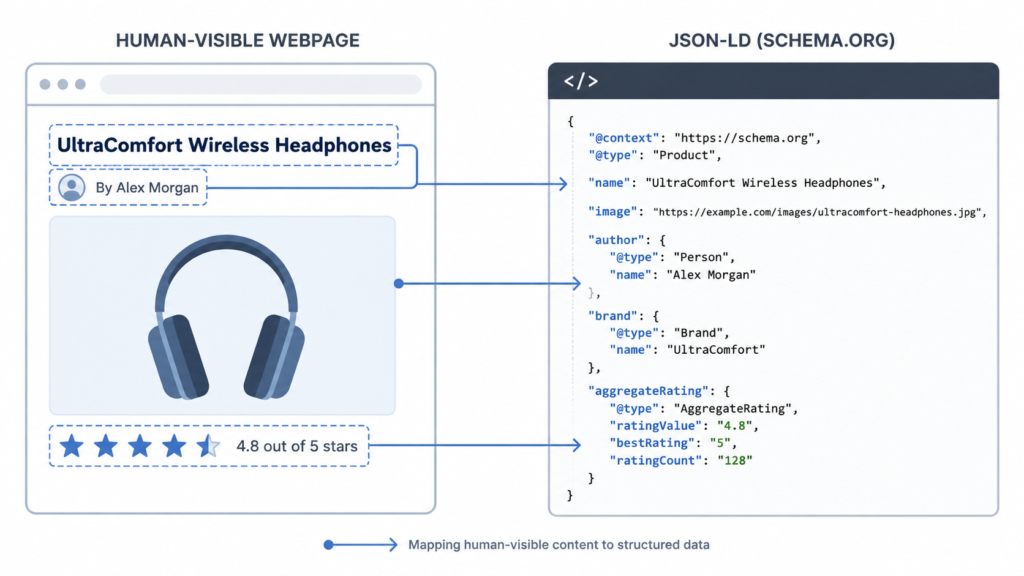
An engine can’t cite what it can’t parse. That means clean HTML, content that isn’t blocked from crawlers, and structured data that labels what each thing on the page actually is, the author, the product, the article type.
Schema markup won’t rank you inside an LLM on its own, but it removes ambiguity: it tells a machine “this is a Product, this is its brand, this is the review score” instead of leaving it to guess. Adding schema markup for AI search is one of the more concrete levers you control. Several WordPress plugins handle this, Yoast, Rank Math, and Schemafy among them, and tools like Schemafy’s Auto Schema Generator and Smart Schema Builder add JSON-LD without you writing it by hand. If you’d rather work outside a plugin, you can generate JSON-LD with a free tool and validate your schema against Google’s spec before publishing.
Add Statistics, Sources, and Expert Quotes
This is where the Princeton data is loudest. Adding statistics, citing external sources, and including expert quotations were the highest-impact changes the study measured, together pushing visibility up to that 40% ceiling.
The reason is mechanical. A concrete, attributable stat gives the engine something it can lift and cite with confidence. “Traffic went up a lot” is unquotable. “Traffic rose 41% after the change, per this source” is exactly the kind of passage that ends up in an answer.
Build Entity-Level Authority and Third-Party Validation
Generative engines lean on entities: recognizable, consistent things like your brand, your authors, and your products. When those entities show up consistently across the web, the model treats you as a known quantity rather than an unfamiliar page.
You build that signal off your own site as much as on it. Third-party mentions, consistent business and author profiles, and a stable presence on high-quality platforms all reinforce that you’re an entity worth citing. It compounds slowly, which is why it’s hard to fake.
A concrete example: say you publish under an author who also has a filled-out profile on LinkedIn, a byline on two industry publications, and an author schema block that ties those identities to the same name and URL. To an engine, that’s three consistent signals pointing at one entity instead of an anonymous string of text. When it weighs whether to trust a claim from your page, that consistency is what separates a citable source from a page it skips.
Structure Content for Synthesis
Write so a passage can be lifted without its surroundings. Clear headings, one idea per section, and answers that stand on their own make it easy for an engine to grab a clean chunk.
Extractable formats help here: short definitions, lists, comparison tables, and FAQs all give the synthesizer a tidy unit to quote. If a human can skim the section and get the answer, so can the machine.
How to Measure GEO Success
There’s no clean “rank position” to watch, which makes measurement the hardest part of GEO right now. Instead of a single number, you’re tracking a few signals: how often engines mention or cite you, your share of voice against competitors in AI answers, and referral traffic arriving from ChatGPT, Perplexity, and similar sources.
Be honest about the state of the tooling. It’s young, it varies by engine, and no single dashboard covers all of them well yet. Treat anything that claims total coverage with suspicion.
A practical baseline costs you nothing. Keep a fixed set of test prompts that matter to your business, run them across the major engines on a regular cadence, and record whether you’re cited and how you’re described versus competitors. It’s manual, but it’s a real signal while the measurement space matures.
Make it concrete. If you sell WooCommerce SEO services, a test prompt might be “what’s the best way to fix WooCommerce product schema.” Run it in ChatGPT, Perplexity, and Google’s AI Overview once a week, and log three things in a spreadsheet: were you cited at all, which competitors were cited instead, and how the engine summarized the topic. After a month you have a trend line, not a guess, and you can see whether the content changes you made actually moved you into the answer.
Getting Started With GEO
You don’t start GEO from scratch. You start from the SEO foundation you already have and extend it, so the crawlable, authoritative pages you’ve built are already doing double duty.
Pick your highest-value pages and make three passes this week: add concrete statistics and cited sources where you’re making claims, break dense sections into self-contained, extractable answers, and confirm the underlying HTML and structured data are clean so an engine can parse you without friction. None of that requires a new content strategy. It requires making your best existing content easier to quote.
If you want a first-week checklist, keep it small enough to actually finish:
- Choose the five pages that already earn the most search traffic.
- On each, add one attributable statistic and one linked source to your main claim.
- Rewrite one buried answer into a short, self-contained paragraph an engine could lift.
- Check that each page’s schema validates and nothing is blocking crawlers.
- Save three test prompts for those topics so you can measure citations later.
That’s a few hours of work against pages you already own, and it puts the GEO fundamentals in place before you invest in anything more ambitious.
Frequently Asked Questions
Is GEO replacing SEO?
No. GEO extends SEO rather than replacing it. The fundamentals, crawlability, quality content, and real authority, serve both, and most sites will run GEO and SEO together rather than choosing between them.
Who invented the term GEO?
The term was introduced in 2023 by a research team led by Princeton (with collaborators from Georgia Tech and IIT Delhi) in the paper “GEO: Generative Engine Optimization,” later presented at the KDD 2024 conference (Aggarwal et al.).
How long does GEO take to show results?
It varies. Generative engines re-crawl and re-synthesize continuously, so concrete changes like added statistics, citations, and clean schema can surface within weeks, while entity-level authority builds more slowly. No one can promise a fixed timeline.
What tools track GEO performance?
An emerging category of AI-visibility and brand-mention monitoring tools checks whether engines cite you, though the space is new and uneven. Schema and content tools help you prepare pages to be citable, but keeping your content clean is a different job from tracking citations, so expect to combine a few tools rather than rely on one.
Final thoughts
GEO isn’t a magical new channel. It’s SEO extended into a world where engines synthesize an answer and choose a few sources to cite, and the winners are the sites that make themselves the easiest, most credible thing to quote. The Princeton research makes the same point in numbers: the tactics that lift visibility are the ones that make your content concrete and attributable, not a new set of tricks. If your SEO foundation is solid, you’re most of the way there already.
The fastest way in is to take your most important pages and make them genuinely citable this week: concrete stats, clean structure, machine-readable markup. Do that on your best five pages, keep a handful of test prompts to watch, and you’ll have a real read on whether the engines are starting to cite you long before the tooling catches up.
Does your site already have Schema Markup?
Generate structured data by template, with AI or in bulk, and verify it with Google's Rich Results Test — all from WordPress, no code.
- ✓ 16 schema types
- ✓ Free plan, forever
- ✓ Keeps Yoast / Rank Math

Fabián Tinjacá is the CTO of Schemafy and the engineer who turned an early prototype into a production plugin. He owns the technical side end to end: the plugin core, the schema generation engine, releases, and bug fixes. He also built the Schemafy website in Astro. His take: most WordPress SEO plugins are slow because they try to be five tools at once. Fabián builds Schemafy to do structured data and meta well without dragging down the sites it runs on.